
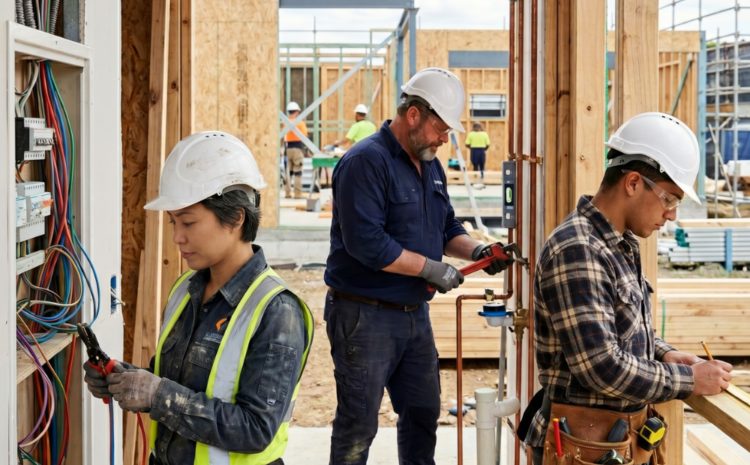
Insurance for Tradies: Why One Size Does Not Fit All
Tradies often purchase insurance quickly to meet licensing, contractual or site access requirements. Once the policy is in place, it is easy to assume that it will respond to any incident connected to the work being performed. In reality, insurance for electrical contractors, carpenters, plumbers and other trades is rarely interchangeable. A generic policy can leave unexpected gaps if it does not accurately reflect the specific activities undertaken.
Each trade carries its own exposure profile. Electricians may face higher risks associated with fire or property damage. Plumbers may deal with water damage exposure. Carpenters and structural trades may encounter height risks or complex framing environments. If the policy schedule describes the business too broadly or too narrowly, issues can arise when a claim is assessed.
Generic policies can create problems where:
- Declared activities do not match the actual scope of work
- Certain higher risk tasks are excluded
- Work at height or specialised installations are not disclosed
- Subcontracted activities are not properly considered
For example, a tradie may primarily undertake residential work but later accept commercial projects. An electrician may begin installing more complex systems than originally declared. A carpenter may move from internal fit-outs into structural framing. If these changes are not communicated and reviewed, the policy may contain restrictions that were never intended to apply to the current operations.
Claims are sometimes challenged when an activity falls outside the declared scope of work. This does not necessarily mean there was no insurance in place, but it can mean the specific task being performed at the time of the loss was not contemplated when the policy was arranged. In those situations, the insurer will assess the claim against the wording and the disclosed activities, not against assumptions about what the business now does.
The issue is rarely obvious until something goes wrong. A tradie may only discover that an activity is considered higher risk or outside the declared scope after a third party property damage claim or site incident occurs. By that stage, options are limited and stress levels are high.
Tailored, trade-specific advice is designed to reduce this risk. Rather than relying on broad or generic descriptions, the policy should be structured around the actual services provided. This involves understanding the tools used, the environments worked in, the types of contracts entered into and any specialist tasks performed. When declared activities accurately reflect operations, the likelihood of disputes at claim time is reduced.
Insurance for tradies is not about having the cheapest policy available. It is about ensuring that the cover aligns with the work being undertaken. As a trade business grows or diversifies, regular review ensures the policy evolves accordingly and continues to provide appropriate protection.
Final Thoughts
No two trades operate in exactly the same way, even within the same industry category. Generic insurance arrangements can create gaps when activities evolve or expand. Ensuring your policy reflects the precise nature of your work provides greater clarity and confidence if a claim arises. A structured review can help confirm that your cover matches the services you deliver today.