
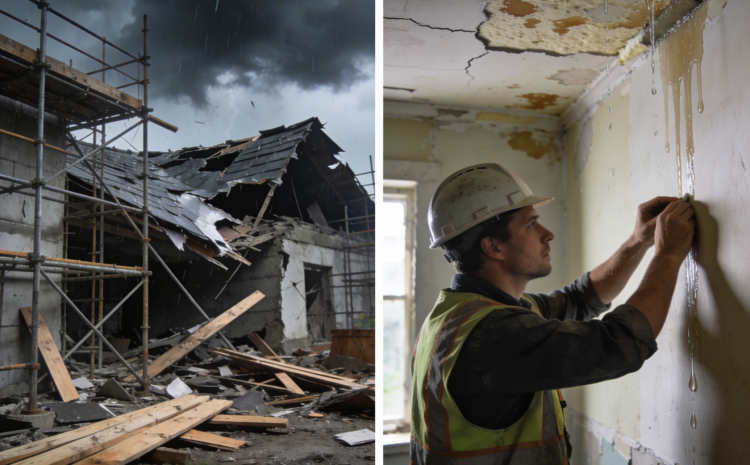
Defective vs Damaged Work: Why Insurance Won’t Cover Your Mistakes
In construction, issues arise on almost every project. Materials fail, weather events disrupt schedules and workmanship errors occur despite best intentions. When something goes wrong on site, one distinction becomes critical in determining whether your insurance may respond. Is the issue defective workmanship, or is it accidental physical damage?
Many builders assume that if something happens during construction, their contract works policy will automatically step in. In reality, insurance policies are designed with very specific triggers, and misunderstanding those triggers is one of the most common causes of claim frustration in the building industry.
Construction works insurance is structured to respond to physical loss or damage caused by an external event. Its purpose is to protect your balance sheet from unforeseen incidents that physically impact the project. Typical insured events include:
- Storm or cyclone damage
- Fire
- Theft or vandalism
If a partially completed structure is damaged by a severe storm, that is physical damage resulting from an external cause. Subject to the terms and conditions of the policy, this is the type of scenario contract works insurance is intended to address. The policy exists to protect against unexpected events, not to guarantee construction quality.
The position changes when the issue stems from how the work was performed. This is where confusion most often occurs. If a wall is installed incorrectly, waterproofing is applied poorly, incorrect materials are used or finishes fail to meet specification, the issue arises from workmanship rather than from an insured damage event. Most construction works policies contain exclusions relating to defective workmanship, defective materials or defective design. In practical terms, this means the cost to rectify the defective component itself is typically excluded.
Builders frequently confuse scenarios such as:
- A roof installed incorrectly that later leaks
- Structural elements positioned incorrectly and requiring demolition
- Work completed to the wrong specification and needing rework
In each of these examples, there is no insured external event triggering the policy. The problem originates from how the work was carried out. Some policies may respond differently if defective work causes subsequent physical damage to other parts of the project, but this depends heavily on the wording and how the claim is assessed. It should never be assumed.
Another factor that contributes to confusion is policy structure remaining unchanged while a business grows. As project values increase and work becomes more complex, exposure changes. If insurance is simply renewed each year without a proper review, there may be a gap between what the builder expects and what the policy is designed to do. Understanding what is excluded is just as important as understanding what is covered.
Final Thoughts
Insurance is not designed to correct construction mistakes. Its primary role is to respond to unforeseen physical damage events that could materially affect your financial position. When builders clearly understand the distinction between defective workmanship and accidental damage, they are better equipped to manage risk and avoid claim surprises. If your projects or turnover have evolved in recent years, your insurance structure should be reviewed to ensure it aligns with the work you are actually performing.