
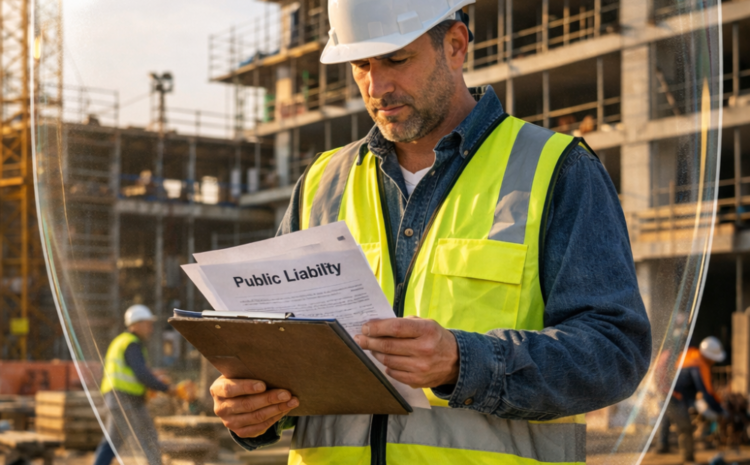
Is Your Public Liability Cover Fit for Your Actual Work?
Public liability insurance is a core policy for builders and tradies, yet it is often arranged once and then renewed year after year without detailed review. As a business grows, the type, scale and complexity of work can shift significantly. If the policy does not evolve alongside those changes, there can be a gap between the risk you are carrying and the cover you believe you have in place.
When a business first starts, jobs may be smaller, sites less complex and turnover relatively modest. Over time, that can change. Builders move into larger residential projects, commercial work, higher value contracts or sites involving multiple subcontractors. Exposure increases not only in dollar terms but also in complexity. Higher sites, structural elements, public interfaces and subcontractor coordination all introduce different liability considerations.
Risk can change in practical ways such as:
- Taking on larger contract values
- Working at greater heights
- Expanding into commercial or specialised projects
- Increasing the number of subcontractors engaged
If the public liability policy was structured based on the original scope of work, it may not accurately reflect these new exposures. In some cases, policy schedules continue to describe work that no longer matches the actual activities of the business. This misalignment can become relevant if a claim arises.
Underinsurance does not always mean having a limit that is too low. It can also mean having activities that are not properly declared. For example, a builder who originally undertook only renovations may later move into new builds or structural extensions. A tradie who worked primarily on residential sites may begin undertaking commercial projects with different risk profiles. If those changes are not disclosed and reviewed, the policy may contain restrictions or conditions that were never intended for the current operations.
There are also situations where contract requirements evolve. Larger head contractors and commercial clients often require higher liability limits or specific endorsements. If the policy has been renewing automatically without scrutiny, it may not satisfy those updated contractual obligations. Discovering this after signing a contract can create unnecessary pressure and administrative stress.
A structured review of public liability cover should involve asking practical questions about the current state of the business. This may include:
- Has turnover increased significantly since the policy was first arranged?
- Are projects larger or more complex than they were previously?
- Has the type of work or client base changed?
- Do current contracts require higher limits of liability?
Answering these questions allows the policy to be aligned with the reality of operations rather than historical assumptions. Public liability insurance is designed to protect against third party property damage and personal injury claims. Ensuring the declared activities and limits accurately reflect your business today is critical to maintaining that protection.
Final Thoughts
As your business grows, so does your exposure. Public liability cover should reflect the work you are actually performing, not the work you were doing several years ago. Regular review ensures your policy keeps pace with increasing contract values, evolving project types and changing contractual obligations. Taking the time to align your cover with your current operations can provide greater certainty and confidence if a claim arises.